
Independence is the Soil, Democracy the Seed
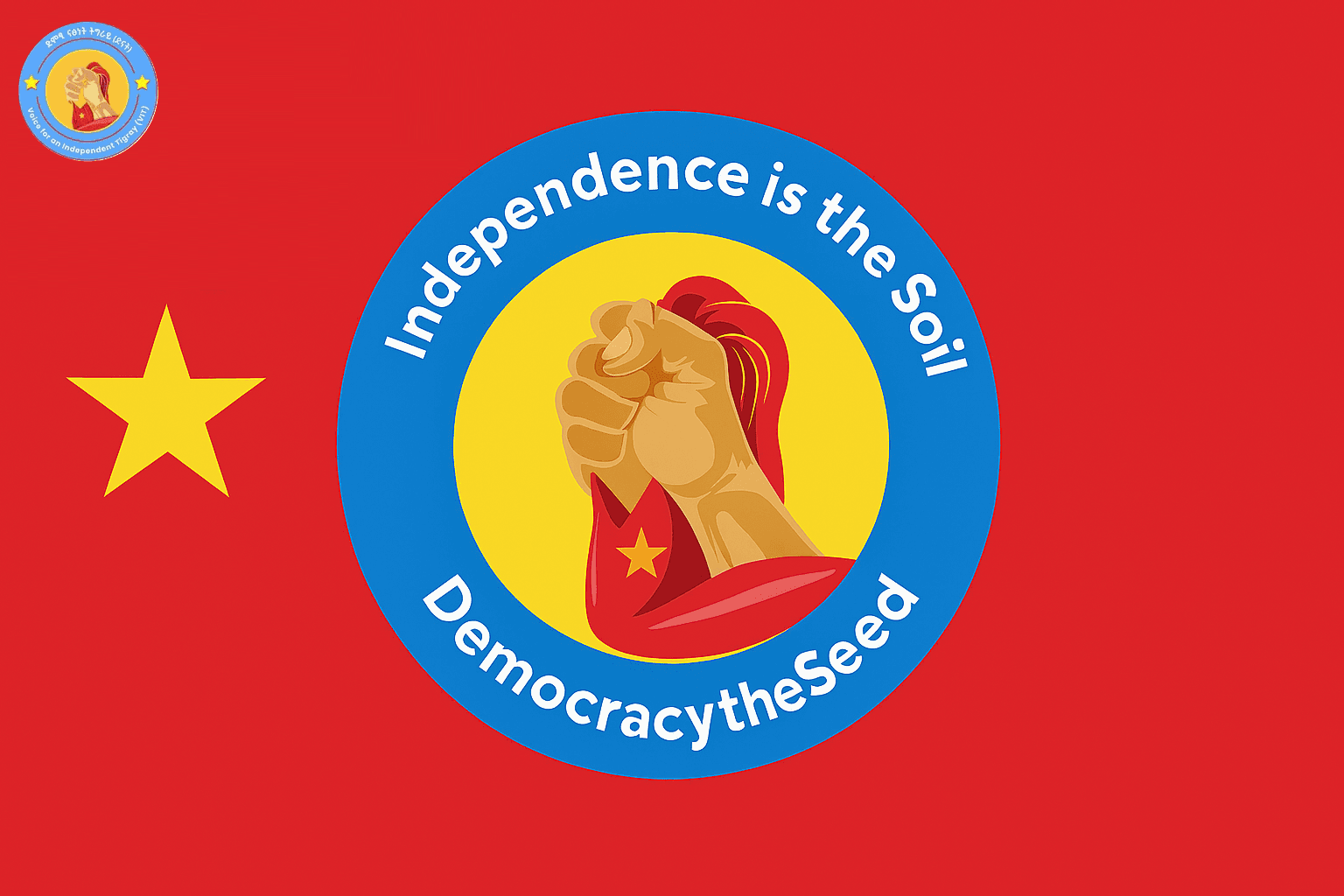
Independence is the Soil, Democracy the Seed
“Seek ye first the political kingdom, and all things shall be added unto you.”– Kwame Nkrumah (Ghana’s first Prime Minister and President). For Nkrumah, sovereignty was the foundation on which democratic institutions could later be built. Thus, independence must come before democracy.
“Self-determination is not a mere phrase; it is an imperative principle of action.”– Woodrow Wilson (28th President of the United States). Wilson highlighted self-determination as a universal right. His words underline that people must first be free from external domination in order to shape democratic governance.
“Free institutions are next to impossible in a country made up of different nationalities. Each nationality should have a government of its own.”– John Stuart Mill (British philosopher). Mill stressed that democracy could not thrive in a context where a nation lacked independence. Sovereignty is needed to create genuine democratic institutions.
This piece challenges the assumption that a society must first establish a fully functioning democracy before seeking independence. It argues that under conditions of systemic injustice, the call for “democracy first, then independence” undermines the fundamental right of peoples to self-determination. The piece defines the concept of independence, examines its driving forces, highlights its relevance to Tigray’s situation, and situates these dynamics within broader historical patterns.
What is Independence?
Independence refers to the condition in which a political community exercises complete self-governance free from external domination. It entails the sovereignty to make and enforce political, legal, economic, and social decisions without interference from another state or foreign entity. Within the framework of international law, independence is a core element of sovereignty, enabling a people or nation to chart its own course and determine its future in accordance with its own laws, interests, and values.
The question of independence is not a modern invention. It is a centuries-old principle, rooted in the enduring human drive for self-determination, dignity, equality, and freedom. Throughout history, people have risen against empires and colonizers to claim the right to govern themselves. Whether through resistance, political mobilization, or cultural revival, the quest for independence has always reflected a fundamental human imperative—the right to shape one’s own destiny without coercion or subjugation. From ancient struggles for autonomy to contemporary liberation movements, independence has stood as both a rallying cry and a moral claim, legitimized not by the prior existence of democratic institutions but by the collective will of a people to live free.
Driving Forces
The quest for independence is driven by a blend of political, cultural, economic, and existential threats. At its core lies the universal desire for self-governance—especially when people are subjected to political oppression, denied meaningful representation, or governed without their consent. In such circumstances, the call for independence is not a mere political preference. It is a demand to reclaim agency and political authority over one’s own future.
This often intensifies when marginalized groups face aggressive assimilation, dehumanization, segregation, and genocide, driving them to fight for and preserve their culture, language, traditions, and identity. Grievances and mass atrocities leave deep and enduring scars, often fuelling the determination to secure sovereignty as a form of redress and justice.
Economic exploitation and systemic inequality lead to conflicts and violence, which in turn may intensify demands for independence. Throughout history, dominated regions have seen their natural and human resources extracted to enrich external powers while their own people remain impoverished and underdeveloped. This often fuels the determination to secure sovereignty. In such cases, independence becomes not only a political goal but an economic necessity—an opportunity to take control of land and capital for the benefit of the local population.
In extreme circumstances—genocide, ethnic cleansing, crime against humanity, or systemic persecution—independence is no longer a question of governance but of survival itself.
The struggle for independence is rooted in the principle of self-determination, recognized in international human rights law, affirming that every people have the right to freely determine their political status and pursue their economic, social, and cultural development. So, independence is far more than a legal or political claim. It is a profound assertion of dignity, historical identity, and the unassailable right of a people to choose their own destiny.
The Tigray Situation
It is widely known that Tigray has endured unimaginable atrocities throughout its long and turbulent history, yet none match the devastation of the recent genocidal war. This war brought unprecedented destruction, including organized mass massacres, ethnic cleansing, widespread sexual violence, the forced displacement of millions, and the deliberate targeting of civilians and critical infrastructure. The scale and severity of these atrocities highlight the urgent necessity for Tigray to pursue independence as a fundamental measure to protect its people, safeguard its identity, and prevent further subjugation.
For over a century, Tigrayans have endured marginalization, discrimination, and war that have inflicted political, economic, and human devastation. These were not incidental tragedies. They were deliberate and oppressive policies aimed at eroding Tigray’s capacity for self-sustenance and resistance. Such situations have created the desire for independence to shift from a political choice to an existential necessity, a determined act of survival. From this perspective, democracy should never be treated as a precondition for independence.
Amid this reality, some contend that Tigray should establish a functioning democracy before pursuing independence. At first glance, this may sound reasonable. However, the critical question remains: if Tigray were fully integrated within a political system in Ethiopia where genuine democracy truly exists—characterized by equal representation, respect for human rights, and the rule of law—what justification would there be for demanding independence? In such a context, how relevant would the claim for independence truly be? Isn’t the failure to secure political rights within existing systems the very reason people or nations seek independence?
If Ethiopia’s political system were truly democratic—ensuring Tigray’s people full political participation, protection of their rights, cultural recognition, and fair resource distribution—the demand for independence would lose its logic. In the absence of systemic oppression or marginalization, the case for separation weakens. This means, in a genuinely democratic system, there would be little reason to seek separation as all citizens, regardless of ethnic background, would feel secure, represented, and empowered within the political order. But when democratic principles do not exist and when a people are politically marginalized, culturally repressed, economically excluded, and justice systematically denied, the pursuit of independence becomes necessary.
When democracy is eroded, the call for independence becomes neither abstract nor symbolic. It manifests as a direct response to denial of rights, a reaction to structural injustice, and a means of reclaiming survival and self-determination. When the existing political system actively blocks equal rights and representation, independence becomes the only viable path to building a genuine democracy.
Thus, it is not the aspiration for independence that undermines democracy. It is the failure of democracy that drives nations to demand sovereignty. Evidently, Tigray’s demand for independence has gained momentum and legitimacy precisely because democracy in Ethiopia has failed or was never truly established. And this quest is not the product of haste or political immaturity. It is a direct response to enduring injustice, betrayal, and violent repression. Like some say, Tigray’s call for separation is not born of impatience or political opportunism, but of necessity, justice, and survival.
The reality in Tigray vividly illustrates why the question of independence has become a timely agenda. Nowhere are the political, cultural, economic, and existential drivers of independence more present—or more urgent—than in the lived experience of the people of Tigray. Their demand is rooted in a relentless combination of political betrayal, cultural erasure, territorial aggression, economic exclusion, and repeated atrocious wars —each marking catastrophic ruptures and deliberate campaigns of annihilation. Tigray’s distinct historical and cultural identity has long been under attack. Efforts to erase its language, rewrite its history, and suppress its contributions to Ethiopian statehood have intensified alongside military aggression. The very existence of Tigrayan identity has been cast by Ethiopian state actors as a threat to national unity—an unfounded narrative used to justify brutal crimes and atrocities.
This situation has led to voicing for an independent Tigray, which seeks to secure the people’s ight to determine their own future—one where peace, freedom, dignity, and justice prevail. For Tigray, the struggle for independence is not merely a right; it is the only viable path to securing lasting peace. It is a legitimate and urgent response to historical injustice, betrayal, and violent suppression. It is a demand to reclaim political agency, restore dignity, rebuild society, and chart a future free from domination. This is not a shortcut around democracy, nor should democracy be treated as a prerequisite for independence. Rather, independence is the foundation upon which a genuine and sustainable democracy can be built.
Historical Patterns: Independence Precedes Democracy
A truly democratic state guarantees equal rights, meaningful representation, and justice for all its constituents. When these principles are systematically applied, people have every right to raise a question and seek to become independent.
It is not the aspiration or independence that threatens democracy. It is the chronic absence or distortion of democratic norms that drives people to seek separation, which is not contingent upon the prior establishment of democratic governance. Nowhere—legally or morally—are people required to build a functioning democracy before they can claim their independence.
History makes one fact unmistakably clear: nations secure independence first, then build democracy. The global record proves that sovereignty is not a reward for democracy but its foundation, creating the political space and security without which democracy cannot take root.
The United States declared independence from Britain in 1776 while still governed under property-based voting systems, with slavery entrenched in law and society. There was no universal suffrage, and no democratic constitution in place. It was independence that enabled the expansion of rights and the development of a functioning democratic system. The founding fathers first focused on achieving independence, not on creating a democracy. In fact, they didn’t even use the word “democracy” in the Declaration of Independence or the Constitution.
India achieved independence in 1947, but did so without a finalized democratic constitution or fully developed democratic institutions. Under British colonial rule, representative governance was limited and heavily controlled. Independence allowed India to craft its own constitution—adopted in 1950—which laid the foundations for what is now the world’s largest democracy.
Bangladesh’s independence in 1971 came after a brutal war of liberation against Pakistan. At the moment of its independence, Bangladesh lacked stability and an institutional framework for democracy. Indonesia declared independence in 1945, and at the time, it had no democratic constitution or political institutions in place; its democratic development came only later, after a violent and contested transition.
Timor-Leste (East Timor) declared independence from Indonesia in 2002, after decades of violent occupation. At independence, it had only a transitional government supported by the UN, and its democracy was shaped post-independence under international assistance and guidance.
Poland regained independence in 1918 after over a century of partition by Russia, Prussia, and Austria. Its initial post-independence government was authoritarian and unstable. It only experienced intermittent democratic periods between wars, and full democracy emerged after the fall of communism in 1989. Finland declared independence from the Russian Empire in 1917. It experienced civil war shortly afterward. Democracy was not firmly established until the early 1920s. Its transition was tumultuous and marked by ideological conflict. Ireland declared independence from Britain in 1919. It gained de facto independence with the Anglo-Irish Treaty of 1921. It initially formed a dominion under a constitutional monarchy, and endured a civil war and democracy was not fully established until later.
Estonia, Latvia, and Lithuania: these Baltic states gained independence after World War I in 1918; their early years of independence saw brief democratic experiments, but most soon fell into authoritarian rule in the 1930s; and democracy was only consolidated after regaining independence from the Soviet Union in 1991. Greece gained independence from the Ottoman Empire in 1830 after a decade-long war of liberation; at the time of independence, Greece was not a democracy, but a monarchy established with the help of foreign powers, and its transition to democracy was a gradual process that came much later.
Mozambique and Angola both won independence from Portuguese colonial rule in 1975. At the time, both countries adopted one-party Marxist-Leninist governments led by liberation movements (FRELIMO in Mozambique, MPLA in Angola). Democratic institutions and multi-party politics were introduced only decades later. Kenya, which gained independence from Britain in 1963, initially embraced a multiparty constitution but quickly shifted to single-party dominance, and democratic pluralism took many years to develop. Tanzania, which gained independence from Britain in the early 1960s, adopted a single-party system under Julius Nyerere, focusing on unity and development before transitioning toward multiparty democracy much later.
These examples demonstrate that independence is often a foundational step toward democracy—not the result of it. People emerging from colonialism, occupation, or systemic oppression rarely can build democratic systems under foreign domination. Instead, sovereignty enables them to begin the process of democratization on their own terms , often through a difficult and prolonged journey.
Why Post-Independence Failures Don’t Undermine the Right to Independence
Some argue that Tigray must first establish a democratic environment before pursuing independence. This reasoning is flawed, as it overlooks the unique historical, political, and cultural circumstances that shape each nation’s path. It also assumes that democracy, once established, is immune to collapse, ignoring the many cases where nations achieved sovereignty under far less favorable governance conditions and subsequently built strong democratic institutions over time.
History proves the opposite of this fear-driven logic. Even the most well-established democracies can and do erode under corruption, authoritarian creep, foreign interference, or deep internal divisions. The fall of democratic systems is not limited to newly independent states. It has happened in countries with centuries of statehood. Global State of Democracy data shows that more countries experienced net declines in democratic performance than achieved net gains. This implies that democracy is not a static achievement. It is a living system that demands constant protection, adaptation, and renewal.
Skeptics often point to Eritrea and South Sudan as cautionary tales, suggesting independence without democracy leads to failure. This argument is flawed for three reasons.
First, it ignores context. Each country’s trajectory is shaped by unique historical, geopolitical, and economic conditions. Their struggles cannot dictate Tigray’s future.
Second, it misunderstands democracy itself. Democracy is not a guaranteed endpoint but a fragile, ongoing process prone to backsliding even in the world’s oldest states. Independence does not ensure democracy, but it provides the sovereign agency to attempt it, an agency denied under domination. The argument also overlooks the countless cases where nations achieved sovereignty under far less favorable governance conditions and then, over time, built strong democratic institutions.
Third, it prescribes a poisoned cure. It implies that people should remain under a genocidal regime to avoid the possibility of future setbacks. This is an immoral and impossible standard.
Moreover, the struggles of Eritrea and South Sudan arise from fundamental issues of statehood viability, which bear little resemblance to Tigray’s situation. When there is no common language, religion, ethnicity, or culture on which a national identity can be built, and when a state is a product of colonial-era imposition, political tensions almost inevitably arise after independence. One group often seeks to dominate, while others feel marginalized, and governments frequently become undemocratic in an attempt to suppress and silence these tensions. The experiences of Eritrea and South Sudan illustrate this pattern: both states are multiethnic constructs drawn by colonial borders that united groups with little shared identity, while entrenching divisions.
Eritrea amalgamates nine distinct groups, split between Christian highlanders and Muslim lowlanders, with a history of political frictions and aspirations.
South Sudan is even more fragmented, comprising 64 rival ethnic groups with a long history of interethnic conflict. Their failures reflect the immense challenge of forging cohesion from such diversity, not the inherent futility of independence itself.
By contrast, Tigray presents the case for a viable nation-state. Tigray comprises a few ethnic groups, and no tension is visible among them. Its minorities, such as the Irob and Kunama, are integrated communities with strong identification as Tigrayans. Unlike Eritrea and South Sudan, Tigray’s ethnic groups have a long history of cohesive coexistence, providing a solid foundation for effective self-governance and sustainable independent statehood without reliance on artificially constructed civic bonds.
Tigray also possesses a long pedigree of statecraft that predates the Ethiopian empire, demonstrating its capacity for stable governance. This cohesion offers a much stronger foundation for successful statehood than the examples critics invoke.
Tigray Cannot Build an Island Democracy Under Ethiopia
Tigray cannot establish a democratic enclave while remaining under Ethiopia’s authoritarian rule, completely devoid of democratic processes. A democratic society cannot flourish in isolation, surrounded by a state apparatus that suppresses dissent, undermines the rule of law, and denies basic freedoms. As far as Tigray is subjected to a centralized regime (Ethiopia) that rejects democratic principles, its aspirations for justice, accountability, and self-governance will remain obstructed.
Ethiopia’s rulers have long pursued a deliberate, systematic, and wilfully ignorant campaign to dismantle Tigray’s institutional capacity. In the wake of atrocities that have devastated the region, it is not only unrealistic but morally obscene to demand that Tigray meet governance standards that even established independent states have failed to attain after decades of uninterrupted peace.
Tigray’s independence is the necessary first step toward restoring security, rebuilding institutions, and allowing democratic processes to take root. To insist that Tigray must remain within the very state that inflicted such atrocities until it can demonstrate democratic maturity is politically unreasonable. It is not democracy that justifies liberation, but liberation that creates the possibility of democracy.
The formation of an independent nation is a decisive moment in history—finite in time, often marked by the declaration of a symbolic milestone. In contrast, democracy is not defined by a single event. It is a continuous, open-ended process whose goal is to build a just and inclusive society grounded in the rule of law, accountable governance, and active civic participation.
While independence secures the right to self-rule, democracy ensures that this self-rule is exercised fairly, transparently, and for the common good. Independence is a means to achieve political agency; democracy is the method by which that agency is sustained and made meaningful over time. Independence can be won in a generation, while democracy must be nurtured across generations.
Another critical point, democracy is not always a steady or irreversible process—it can advance and recede, as Ethiopia’s recent history demonstrates. From 1991 to 2018, Ethiopia experienced a limited yet notable democratic opening that recognized equality, upheld self-rule rights, and allowed a measure of political pluralism. This fragile progress was reversed following the change in government. A deterioration in human rights has been widely reported, and civic space continued to erode with the federal government tightly controlling the environment. This example underscores that even after independence is declared, democracy is not guaranteed or permanent without ongoing commitment and favourable conditions.
In the final analysis, while democratization is a worthy and necessary long-term goal, it cannot take place in the vacuum of sovereignty, safety, and self-rule. Independence is the soil and democracy the seed in which freedom, accountability, and democracy can grow. Insisting on full democracy as a prerequisite for sovereignty disregards historical realities.
Recent News
ኢትዮጵያ ትግራይን እየገፋች ነው፦ ከታሪክና ትውስታ የመፋቅ ዓላማ ይዞ የመጣው ጦርነት፣ የተፈፀሙት አረመንያዊ ወንጀሎች እና ተዛማጅ ክህደቶ ያነጠፉት አስገዳጅ ፍቺ
January 28, 2026

A New Year’s Wish and Call to Unity from the Voice for an Independent Tigray
September 9, 2025
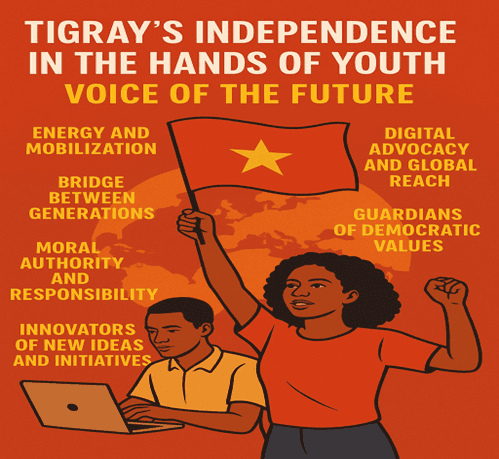
Tigray’s Independence in the Hands of Youth
September 3, 2025
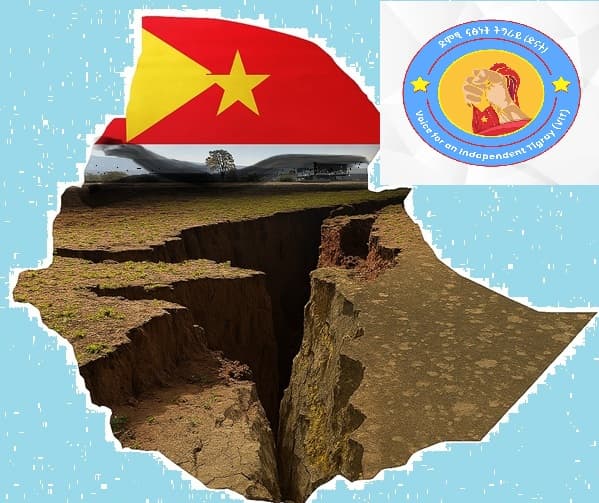
Ethiopia’s Fault Lines and the Rising Call for Tigray’s Independence
September 3, 2025